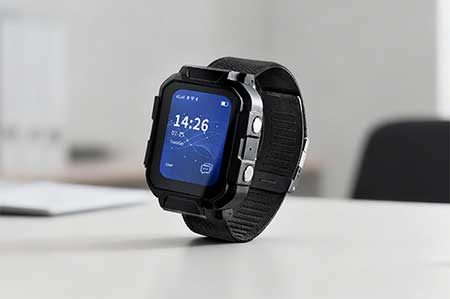
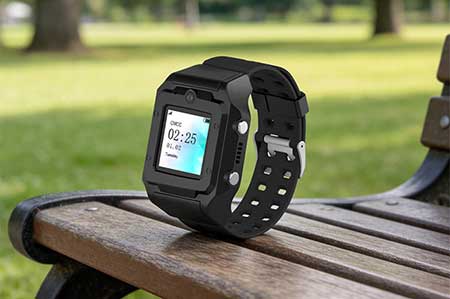
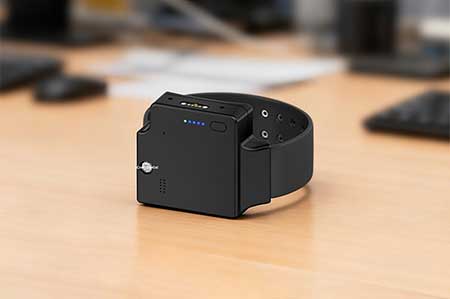
Arm’s October 30 discussion of AI-first wearables highlights a practical challenge: delivering useful intelligence within tight power, size and comfort constraints. It also describes distributing workloads across wearable devices, connected phones and the cloud.
For brands and system integrators planning an AI watch or industry-specific wearable, that raises a practical question: once the hardware is selected, can your team turn it into a working product for your customers?
From ThinkRace’s development perspective, three questions deserve attention before hardware selection.
1. Which tasks need to run on the device?
Start with a task list. Button feedback, sensor data collection, voice interaction, rule-based reminders and backend analysis have different requirements for response time, connectivity and energy use.

Consider a worker requesting assistance during an inspection. How should the wearable acknowledge the request? What information needs to be retained if connectivity drops? How should records be transmitted when the connection returns?
These are requirements to design and test against. Deciding where each task should run helps teams assess the hardware, software and connectivity needed to support it.
2. What can your team actually customize?
Platform APIs and device-side SDKs address different parts of a project. An Open API primarily supports data exchange and workflow integration between systems. A device SDK provides an entry point for building applications on the hardware and accessing the capabilities made available to developers.
ThinkRace’s published SDK development kit includes documentation and demo source code, one hardware sample with debug firmware, and three months of technical support. Its introduction describes a developer mode that allows developers to install their own APKs and access underlying device capabilities.
Before committing to a platform, confirm which interfaces are available, how applications are installed and debugged, and how a development build moves toward production. Permissions, model compatibility and delivery requirements should be checked during sample evaluation.

3. Can you complete an end-to-end workflow?
A feature demonstration and a completed business task require different levels of validation. Start with one manageable workflow: a user initiates an action, the device records it, the backend receives it, a responsible person responds, and the outcome is returned.
Check latency, failure handling and responsibility at each step. Record the test conditions and results, including network changes, energy use, data transmission and application stability. Expand the scope once that workflow performs as required.
Turn the idea into a development plan
ThinkRace approaches AI wearables through device-side development and practical workflows, aligned with its focus on AI Edge and monitoring infrastructure. SDKs, platforms and system interfaces should be selected around the application’s requirements.
If you are planning an AI wearable, prepare three lists: the tasks it must perform, the device interfaces your team needs, and the acceptance criteria for sample testing. These provide a concrete starting point for discussing suitable hardware and an SDK development path with ThinkRace.
For more details pls download the System user manual.
https://www.thinkrace.com/traxbean-ai-personnel-positioning-management-system-manual/
Please log in to the test account to view the demonstration of the Traxbean positioning system and hardware products.
Link:https://traxbean.5gcity.com/
Account:Demouser
Password:123456
Please visit Amazon to purchase the prototype of the product. The functions can be customized.