U.S. immigration enforcement is facing an increasingly visible contradiction: arrests continue to rise, while deportation efficiency has not increased at the same pace.
According to Reuters on September 14, 2026, U.S. Immigration and Customs Enforcement (ICE) made nearly 51,000 arrests in August, marking the third consecutive monthly record. However, actual deportations remained at roughly 1,200 per day. The gap reflects not only enforcement capacity, but also legal procedures, asylum claims, transportation constraints, receiving-country limitations, and prolonged detention processes.
This reveals a deeper structural challenge: as the supervised population grows, the traditional linear model of arrest → detention → deportation becomes increasingly difficult to scale.
.jpg)
The Real Bottleneck: Managing Large Non-Detained Populations

Not everyone entering the immigration enforcement system requires continuous physical detention.
ICE already uses different levels of supervision, including Alternatives to Detention (ATD). Existing approaches include telephone check-ins, GPS monitoring, biometric verification, and case management for eligible non-detained individuals.
The key questions are therefore no longer limited to detention capacity:
Who requires high-intensity supervision?
Who can be managed safely in the community?
Who is experiencing location, device, or behavioral anomalies?
Which events require immediate officer attention?
This is increasingly a challenge of population management and risk-based supervision.
ThinkRace: Extending Supervision Beyond Detention Facilities
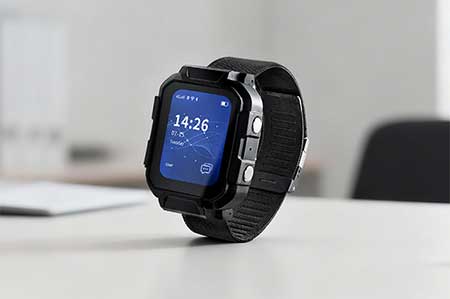
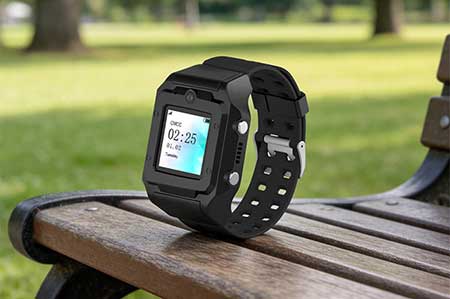
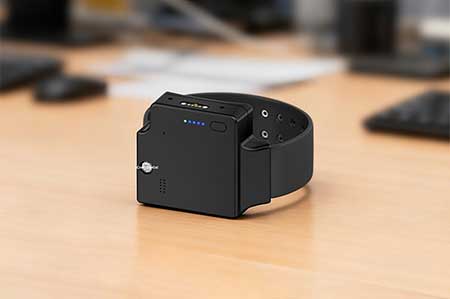
For these scenarios, ThinkRace can provide a digital supervision architecture combining smart monitoring devices, the Traxbean platform, Edge AI, SDKs, and Open APIs.
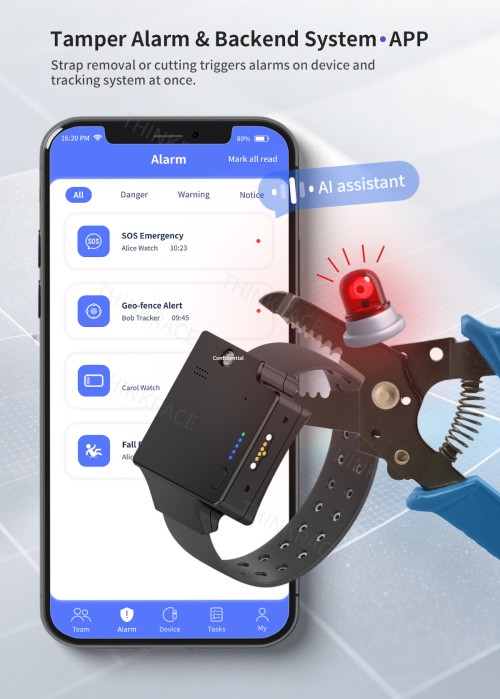
Electronic monitoring devices can continuously provide GPS positioning, geofencing, device status, tamper detection, SOS, and communication capabilities. Traxbean then converts large volumes of device data into actionable supervision events:
Geofence violation → prolonged disconnection → device anomaly → risk identification → automated alert → human intervention
For agencies, this enables differentiated supervision based on rules and risk levels instead of applying the same level of monitoring to everyone.
Edge AI is not designed to replace human decision-making. Its role is to identify anomalies, reduce low-value data noise, prioritize meaningful events, and help officers focus on situations that truly require attention.
From Expanding Detention Capacity to Expanding Management Capacity
The future competitiveness of immigration supervision systems may depend less on building more detention facilities and more on increasing digital management capacity.
Through the Traxbean Open API, ThinkRace can connect monitoring data with government case-management, identity-management, or law-enforcement platforms. Through SDK and device-side development capabilities, agencies can also configure check-in methods, alert logic, positioning rules, and supervision workflows according to local regulations.
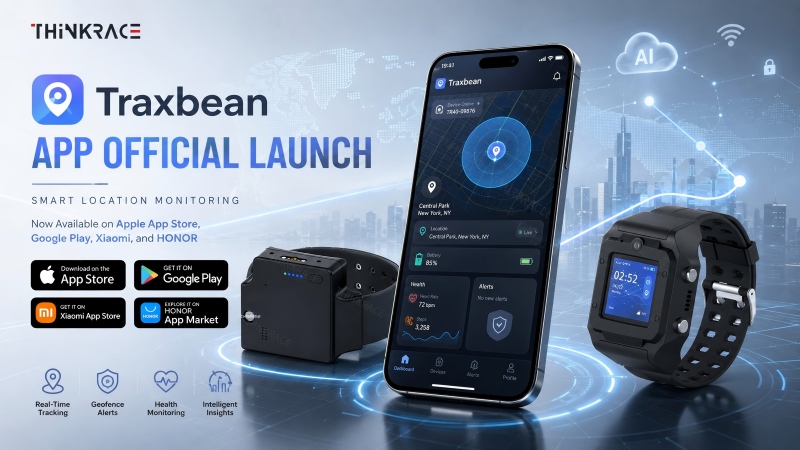
This transforms electronic monitoring from a standalone device into a digital infrastructure connecting people, devices, platforms, and enforcement agencies.
When arrest volumes grow faster than detention and deportation capacity, the sustainable answer may not simply be more facilities. It may be a smarter supervision framework built around risk segmentation, community monitoring, real-time alerts, and cross-system coordination.
The next stage of immigration management is therefore not just about detaining more people, but about managing different risk groups more effectively, intelligently, and responsibly.
For more details pls download the System user manual.
https://www.thinkrace.com/traxbean-ai-personnel-positioning-management-system-manual/
Please log in to the test account to view the demonstration of the Traxbean positioning system and hardware products.
Link:https://traxbean.5gcity.com/
Account:Demouser
Password:123456
Please visit Amazon to purchase the prototype of the product. The functions can be customized.