Industry Insights | Smart Wearables | Edge AI | Open Development
As digital healthcare, artificial intelligence and IoT technologies continue to converge, smart wearables are evolving beyond traditional health data collection devices. They are becoming intelligent terminals capable of data analysis, activity recognition and system integration.
Held in Düsseldorf, Germany, from November 16–19, 2026, MEDICA is one of the world’s leading medical technology trade fairs. This year’s event places a stronger focus on wearable technologies, featuring the debut of the Wearable Technologies Conference Europe and the Wearable Technologies Pavilion. Key areas include mobile monitoring, patient care, rehabilitation, sports health and sensor technologies.
These developments highlight the growing role of smart wearables in the digital healthcare industry.
1. Smart Wearables: From Data Collection to Real-World Applications
Traditionally, smart wearables have focused on monitoring heart rate, blood oxygen saturation, body temperature, physical activity and sleep patterns.
With advances in sensors, wireless connectivity and AI, the industry’s focus is shifting from simply collecting data to interpreting it.

Future wearable devices will need to do more than monitor information. They will increasingly support activity analysis and status recognition, providing useful data for health management, elderly care and personnel safety applications.
This evolution requires not only reliable hardware, but also flexible software architectures, data-processing capabilities and integration with third-party systems.
2. Edge AI: Bringing Intelligence Closer to the Data
In mobile health management, elderly care and industrial safety, network connectivity, response time and data privacy are important considerations.
Edge AI enables data processing on devices or at the network edge, helping reduce dependence on continuous cloud connectivity while supporting timely status analysis and abnormal-event alerts.
For wearable technology, meaningful AI integration goes beyond adding isolated features. It requires the coordinated integration of sensors, algorithms, firmware and application logic.
This enables wearables to evolve from simple data-recording devices into intelligent terminals with greater contextual awareness.
Health data analysis and abnormality alerts should not be interpreted as medical diagnosis. Medical applications remain subject to relevant clinical and regulatory requirements.
3. ThinkRace: An Open AI Wearable Development Platform
To address growing demand for customization and system integration, ThinkRace positions itself as an AI Edge Development Platform, combining smart wearable hardware, Edge AI, SDK development tools and the Traxbean platform.
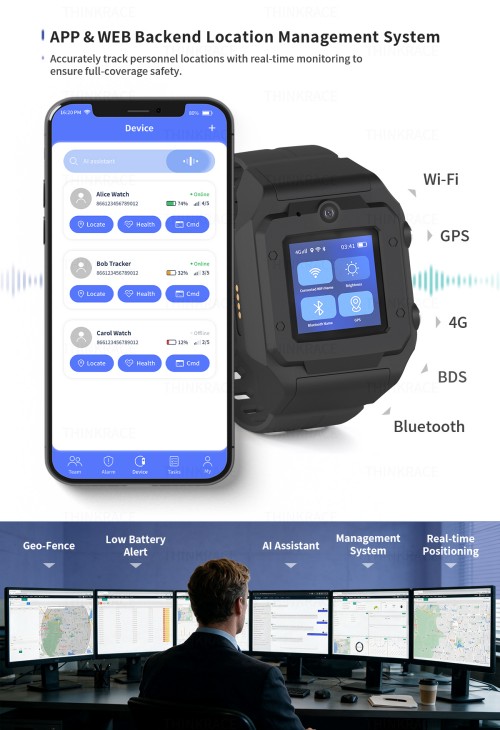
Its ecosystem is built around four key capabilities:
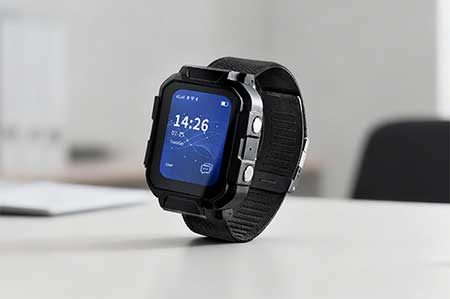
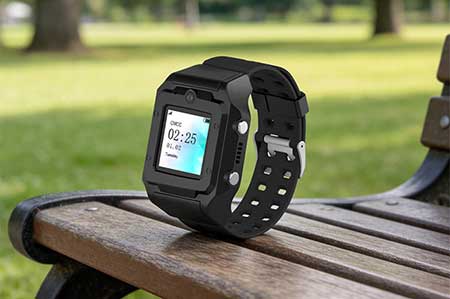
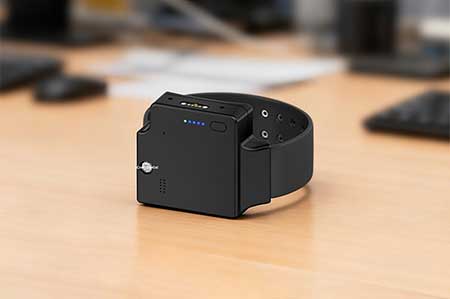
- Smart Wearable: Platforms such as MT4 and PT880N provide a hardware foundation for health monitoring, personnel safety and industry-specific applications.
- Edge AI: Supports the development of edge-side data processing, activity analysis and abnormal-risk identification based on sensor data and application logic.
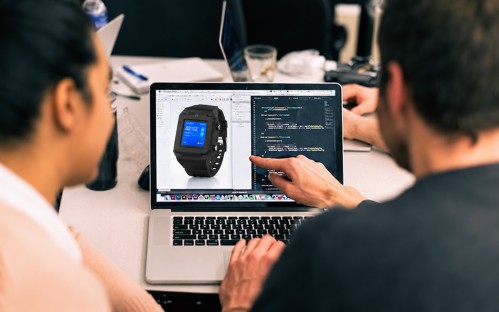
- SDK & Firmware Customization: Provides technical documentation, demo source code, a device sample with Debug firmware and online technical support, enabling developers to build applications, customize firmware and extend device functionality.
- Traxbean & Open API: Enables integration between wearable devices and third-party software platforms, management systems and digital health services, connecting hardware, data and business applications.
Through this open development architecture, customers can build their own branded products, develop differentiated features and expand applications according to their business requirements.
4. From Device Supply to Global Ecosystem Collaboration
Competition in the wearable industry is expanding beyond hardware specifications to include software development, edge intelligence and ecosystem integration.
Digital health companies, elderly care providers, wearable brands and system integrators increasingly need flexible and scalable technology foundations.
MEDICA 2026 highlights the growing convergence of wearable technology and digital healthcare, creating new opportunities for collaboration across the industry.
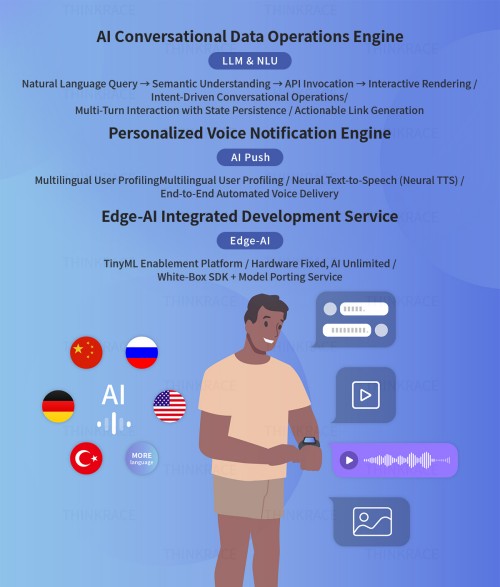
ThinkRace continues to develop its ecosystem around Smart Wearable + Edge AI + SDK + Open API, providing global brands, OEM/ODM partners, developers and system integrators with an open and flexible foundation for wearable product development.
ThinkRace — Smart Wearable. Edge AI. Open Development.
Feature & Ordering Information: Available functions depend on device configuration and project evaluation. Certain features require customization and are available for bulk orders only. Please contact a ThinkRace sales consultant for details. SDK development kits are available under applicable plans, supporting development and validation starting with a single device.
For more details pls download the System user manual.
https://www.thinkrace.com/traxbean-ai-personnel-positioning-management-system-manual/
Please log in to the test account to view the demonstration of the Traxbean positioning system and hardware products.
Link:https://traxbean.5gcity.com/Account:Demouser
Password:123456
Please visit Amazon to purchase the prototype of the product. The functions can be customized.