https://youtube.com/shorts/SwMg0kPZoow?feature=share
In May 2026, a new round of Ebola outbreak occurred in Ituri Province in the eastern part of the Democratic Republic of the Congo. The current strain was the rare Bindiabo type, and there were no approved vaccines worldwide. The World Health Organization has declared it an “International Public Health Emergency of Concern”.
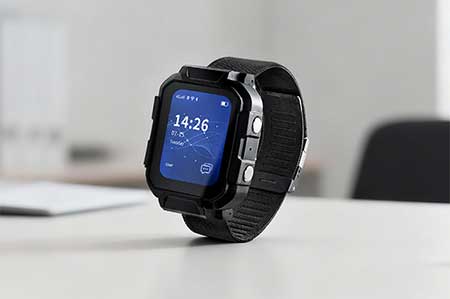
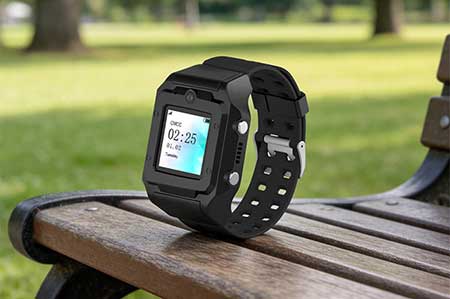
Facing this highly lethal and long incubation period (2-21 days) infectious disease, the traditional “human sea tactic” epidemic prevention model seems inadequate. Thinkrace, with the intelligent wearable solution refined from global epidemic prevention practices, provides digital infrastructure for the entire “prevention, control, and rescue” chain of the epidemic.
1. Global practical verification: The “digital epidemic prevention” network from Abu Dhabi to five continents
The Thinkrace epidemic prevention intelligent wearable solution is not a laboratory concept but a mature system that has been tested through large-scale deployment in more than twenty countries around the world.
Middle East benchmark: The “zero-contact” isolation practice in Abu Dhabi
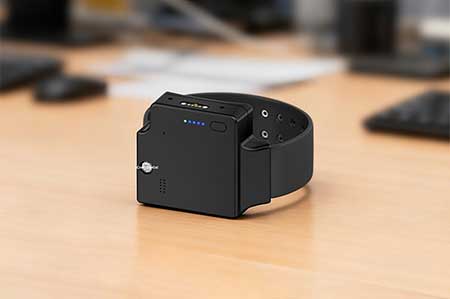
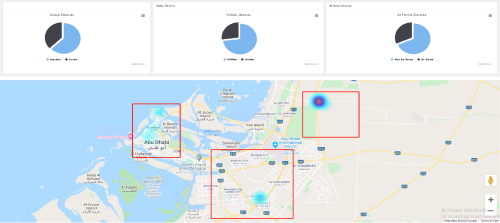
In September 2020, the Abu Dhabi Information Office of the United Arab Emirates released the latest isolation regulations: All international passengers traveling to the capital Abu Dhabi must be quarantined for 14 days and wear the Pt99 epidemic isolation bracelet provided by Thinkrace. Thinkrace deployed a complete epidemic monitoring software system for the Emergency Crisis and Disaster Management Committee of Abu Dhabi and continuously provided Pt99 bracelets to help the country achieve “comprehensive grasp” of the movement of quarantined personnel, replacing manual inspections with digital means, and significantly reducing administrative costs while ensuring the effectiveness of epidemic prevention.

Global map: The practical network on five continents
During the COVID-19 pandemic, the Pt99 epidemic isolation bracelet of Thinkrace has been widely deployed globally, covering Saudi Arabia, Brazil, Sudan, the United Arab Emirates, Malaysia, New Zealand, India, Italy, the United States, South Africa, Singapore, Indonesia, Australia, Romania, Jamaica, Canada, etc., in more than twenty countries. The product footprint covers Asia, Africa, Europe, and the Americas. This global deployment experience means that in the face of the Ebola epidemic, Thinkrace has the ability to respond quickly in complex international environments, adapt locally, and implement on a large scale.


2. Thinkrace intelligent wearable: The “dual-core engine” of epidemic prevention
To address the three major pain points of Ebola – “early symptoms are concealed, contact transmission is fatal, and isolation and control are difficult”, Thinkrace builds a full-chain solution from “prevention” to “control” with two core functions – “health warning and assistance” and “isolation monitoring”.
[Function 1] Health warning assistance: Transform “fever” into “alert”
The early symptoms of Ebola are highly similar to those of influenza and malaria (fever, fatigue, headache, muscle pain), and are easily misdiagnosed and missed. The epidemic-specific wristwatch of Thinkrace breaks this predicament by 24-hour continuous symptom monitoring:
| Monitoring dimension | Functional value |
| Body temperature monitoring | The wrist temperature is collected every minute. Any abnormal increase in temperature will be reported immediately. This completely eliminates the monitoring blind spot of “two manual temperature measurements per day”. |
| Heart rate variability rate(HRV) | Detect sudden increases in heart rate and other stress responses, and identify the early signs that “the body is fighting the virus” |
| Blood oxygen / Blood pressure | Early indicators of multiple organ damage, key warning parameters of Ebola hemorrhagic fever |
| SOS Emergency Call Button | Press and hold for 3 seconds to trigger the silent function. It will simultaneously send precise location information, environmental recordings and real-time vital signs to 3 emergency contacts and the epidemic prevention platform. |
【Function 2】
Isolation Monitoring: Plugging the “Electronic Lock” into Virus Transmission
The Thinkrace isolation monitoring solution employs a “three-tier mechanism” of “electronic fence + anti-tampering design + cloud control” to achieve low-cost and high-efficiency precise isolation:
① Electronic Fence: Automated monitoring of the virtual isolation barrier
– Based on four-level positioning (Beidou/GPS/WiFi/LBS), a safe area (such as residence, hospital ward, centralized isolation point) is designated for each isolated person.
– When the wearer leaves the fence area, the system immediately alerts the epidemic prevention platform and simultaneously pushes the information to the mobile app of the supervisory personnel.
– Flexible configuration is supported: Different permissions can be set for different periods and areas during the isolation stage (such as the activity range within the hospital vs. absolute no-outside movement at home), and any shape of circular, square, or polygonal fence is supported.
② Full-optical circuit anti-tampering: Eliminating “Wearing a fake ring and running freely”
– Using full-optical circuit anti-tampering detection, the alarm is triggered as soon as the bracelet leaves the wrist.
– IP68 waterproof design, allowing wearing in scenarios such as bathing and swimming, without having to remove it, eliminating the loophole of “borrowing an excuse to remove it”.
– Offline data is stored locally, and it is automatically continued to be transmitted after network recovery, ensuring continuous control even in the event of a network outage.
③ Cloud Control Platform: One screen for monitoring the isolation of thousands of people
– A map visualizes the real-time location of all isolated individuals, with three colors (green – safe, yellow – warning, red – out of bounds) clearly indicating the status.
– Supports batch issuance of electronic fences, schedule management, temperature data aggregation, and automatic classification of abnormal situations for automatic alerts.
– Open SDK/API, allowing for quick integration with various national public health systems (such as the verified deployment model in Abu Dhabi).
III. From “Human Sea Tactics” to “Managing Ten Thousand People with One Screen”: A Disruptive Reconfiguration of Cost and Efficiency
Traditional isolation requires community grid officers, security personnel and medical staff to conduct door-to-door inspections. The average cost of supervision per person is several hundred yuan per day, and the supervisors themselves face extremely high infection risks.
The Thinkrace solution achieves three leaps:
– Efficiency leap: The cloud platform can manage tens of thousands of people simultaneously, transitioning from “massive manpower tactics” to “one screen managing a thousand people”, with management efficiency increasing by more than 10 times.
– Cost leap: A one-time investment in equipment costs, with the average daily supervision cost per person reduced to a few yuan.
– Safety leap: “Zero contact, zero infection risk” throughout the process, allowing supervisors to complete control without entering the isolation area.
IV.For Ebola: Global network coverage of over 200 countries, ensuring reliability and security at the military level.
When facing the Ebola epidemic, the reliability, safety and scalability of intelligent epidemic prevention infrastructure are of crucial importance:
– Global network: Network coverage in over 200 countries, ensuring data transmission and instructions are issued in remote areas such as the Democratic Republic of the Congo.
– Data security: Military-grade encrypted transmission to prevent the leakage of sensitive epidemic prevention data.
– Hardware standards: Judicial-level tamper-proof standards to prevent human evasion of supervision.
Thinkrace is based on the Pt99 solution that has been verified through practical operations in over 20 countries around the world. It provides intelligent epidemic prevention infrastructure with “high cost-effectiveness, high reliability, and high scalability” for the public health systems of various countries. At a time when there is no vaccine for Ebola, the digital epidemic prevention capability that is “visible, manageable, and capable of saving lives quickly” is the first line of defense for safeguarding human lives.